Seat BeltDistributor Enquire
  1. Home
  2. Applications

Applications

The same component, six different problems

Duty cycle, occupant turnover, operating environment and how a vehicle was built all change what matters when specifying a restraint. Here is how those differences play out across the sectors we supply.

PassengerCommercialFleetReplacementWorkshopSpecialty
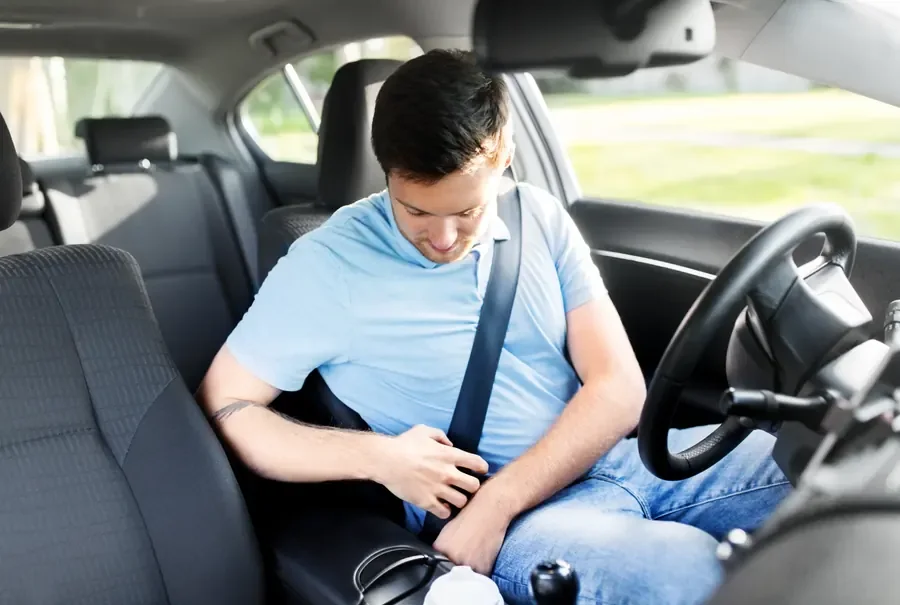
Driver wearing a fastened three-point seat belt at the wheel of a vehicle with a passenger behind

The short answer

Why one specification does not carry across

A restraint that is entirely correct for a private car covering eight thousand kilometres a year may be a poor choice for a delivery van worked in shifts. The physical product might be similar; what differs is the number of cycles the buckle sees, the dust and moisture reaching the mechanism, the range of occupants using it, and how quickly a fault needs to be caught.

The six sections below set out what changes in each sector, and — more usefully — what tends to go wrong when a specification is carried across from one to another without adjustment.

Occupant seated in a passenger car with the seat belt fastened across chest and lap
01

Passenger vehicles

Private cars, family vehicles and SUVs — the application most people picture, and the one where identification is usually most straightforward.

Passenger vehicles are comparatively well documented, which makes matching a replacement easier than in most other sectors. Front and outboard rear positions are almost always three-point retractable; centre-rear positions may be either three-point or lap depending on the vehicle and its age.

Replacement is typically driven by a specific fault rather than a schedule: fraying or cuts in the webbing, a retractor that has stopped pulling back cleanly, or a buckle that no longer latches reliably. Because these vehicles cover comparatively low annual distances, wear tends to appear over years rather than months.

Watch for

  • Positions within one vehicle frequently use different assemblies — do not assume the front specification carries to the rear.
  • Confirm whether the existing belt is the original fitment; a previously replaced belt may not match the factory arrangement.
  • Where child restraints are used, retractor locking behaviour at that position matters and should be part of the specification.
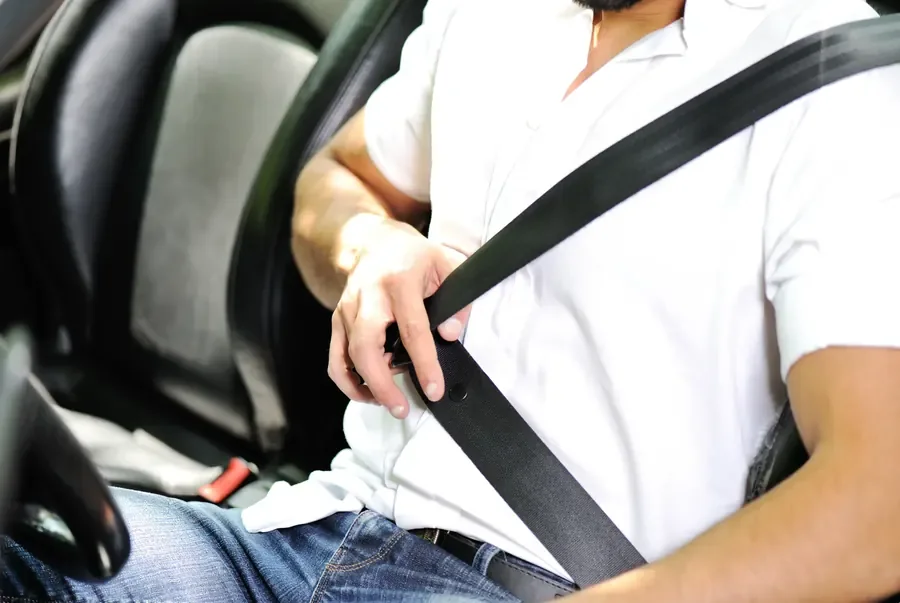
Driver drawing a seat belt across the shoulder inside a commercial vehicle cab
02

Commercial and goods vehicles

Vans, light and heavy goods vehicles and cab-based applications, where belts see far heavier use than in a private car.

The defining difference here is duty cycle. A commercial vehicle worked in shifts may see its belts buckled and unbuckled dozens of times a day, in a cab that is dustier, wetter and more exposed than a car interior. Buckle mechanisms and retractors tend to show wear well before the webbing does, which is the opposite of the pattern in private vehicles.

Identification is also harder. Commercial vehicles are frequently completed by a body builder working from a bare chassis, and two vehicles carrying the same manufacturer badge can have entirely different cab layouts and restraint arrangements. The build, not the badge, decides the part.

Watch for

  • Establish who completed the vehicle body, not just the chassis manufacturer — it often determines the restraint arrangement.
  • Expect buckle and retractor wear to lead webbing wear; inspect the mechanism rather than only the strap.
  • Dust and moisture ingress into buckle mechanisms is a common cause of inconsistent latching in these applications.
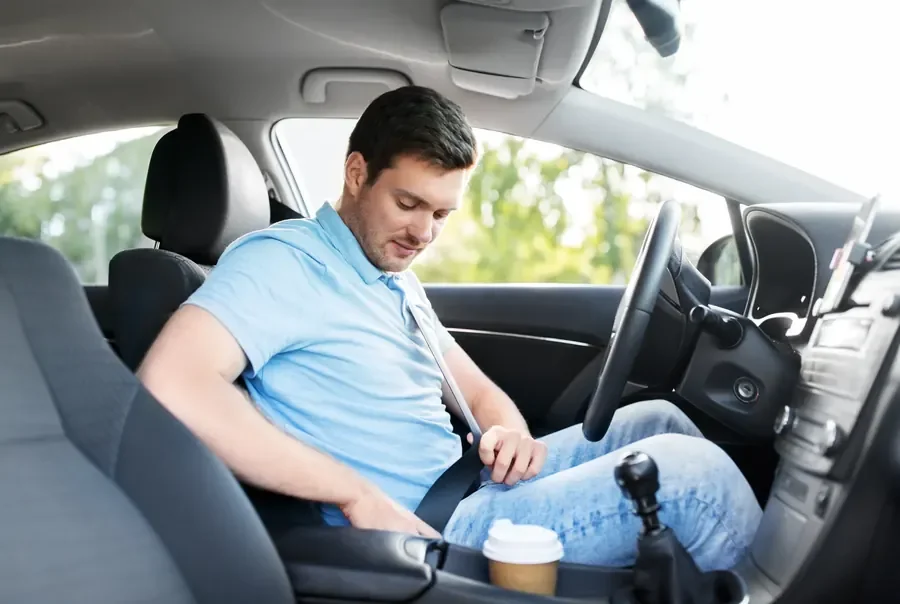
Driver fastening a seat belt in a fleet vehicle before setting off
03

Fleet operations

Multi-vehicle operations, where the unit of the problem is the fleet rather than the individual vehicle.

Fleet requirements introduce a constraint that single-vehicle work does not: consistency. A batch that arrives as an assortment of near-equivalents creates a maintenance problem that persists for the life of the vehicles, because every subsequent replacement has to establish which variant is fitted before it can be matched.

Almost no fleet is homogeneous. Vehicles enter service in different years, in different specifications, sometimes from different suppliers. The practical approach is to group the fleet by actual restraint configuration before quoting anything, rather than treating it as a single line item and discovering the variation later.

Watch for

  • Break a mixed fleet into groups by restraint configuration before ordering — vehicle model alone is not a reliable grouping.
  • Decide whether the requirement is one-off or recurring; it changes how sourcing should be approached.
  • Agree what happens if a specification becomes unavailable partway through a programme, before it does.
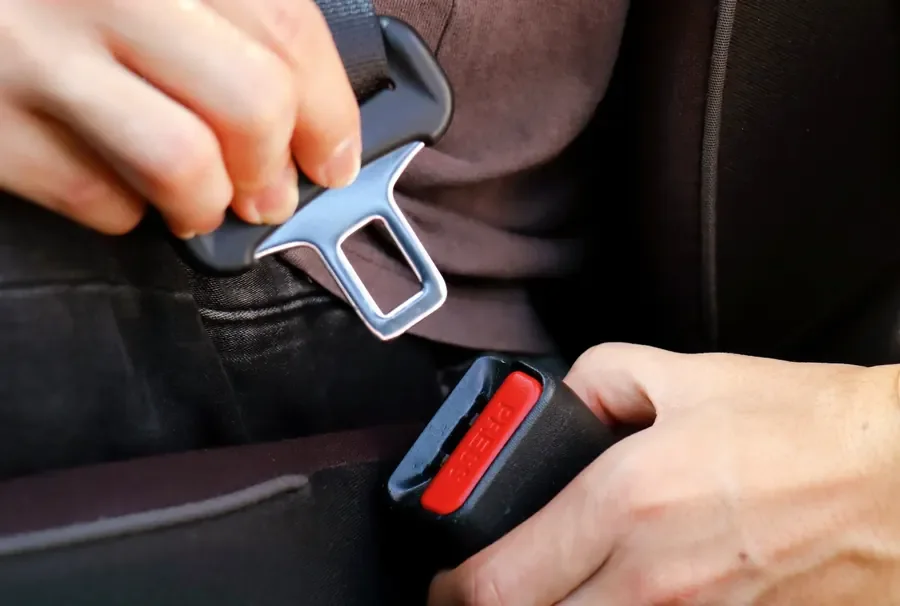
Hands engaging a seat belt latch plate into its buckle receiver during a fitment check
04

Replacement and repair work

Aftermarket and workshop replacement, where the task is matching a new assembly to a vehicle that is already in front of you.

This is the most common context for a seat belt enquiry, and it has one significant advantage: the vehicle is available to inspect. Photographs of the belt, the anchorage points and any stamped part numbers can be taken directly, and measurements can be checked rather than estimated.

The failure mode to avoid is ordering on visual similarity. Two assemblies that look identical in a photograph can differ in stalk length, latch geometry and anchor thread. The anchorage points themselves also deserve attention — corrosion or elongation at a mounting point needs addressing before a new belt goes in, not after.

Watch for

  • Photograph the upper and lower anchorages as well as the belt itself; the mounting arrangement decides fitment.
  • Inspect anchorage point condition before ordering — a new belt into a compromised mounting point solves nothing.
  • A belt that may have been loaded in a collision should be assessed by a qualified technician regardless of appearance.
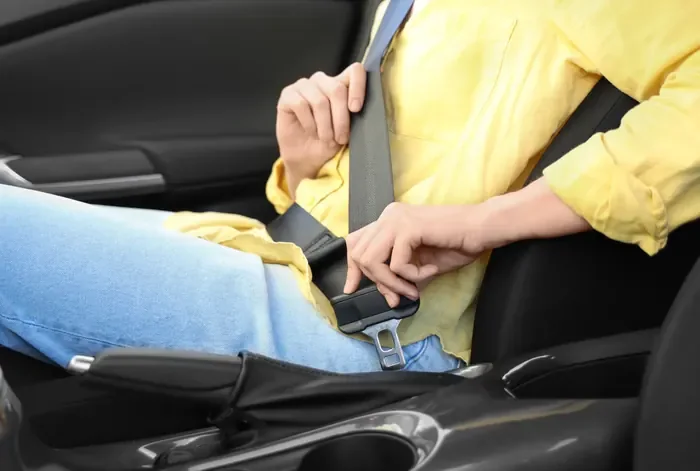
Occupant fastening a seat belt inside a vehicle during a routine inspection
05

Workshops and service centres

Independent garages and service centres handling restraint work as part of routine repair and maintenance.

Workshops are working against a customer deadline, which changes what is useful from a supplier. Speed of identification matters as much as availability, and an unclear answer is worse than an unwelcome one — if something cannot be sourced in time, knowing that immediately allows the job to be re-planned.

Workshops also tend to encounter the awkward cases: older vehicles, previously replaced belts that no longer match the factory arrangement, and installations that have been modified at some point in the past. These are the enquiries where photographs and measurements earn their keep.

Watch for

  • Send photographs at the point of diagnosis rather than the point of ordering — it saves a round trip.
  • Flag your deadline in the enquiry so sourcing can be planned against it honestly.
  • Keep commonly needed anchor hardware and spacers in stock; they are the usual cause of a stalled job.
Two-point lap belt with a metal buckle fitted across a bench seat
06

Specialty and converted vehicles

Converted, rebodied and purpose-built vehicles, and industrial or utility seating that is not automotive in origin.

Where seating has been added, relocated or built to order, the base vehicle specification stops being a reliable guide. Anchorage positions may be entirely different, the structure carrying them may have been fabricated as part of the conversion, and the restraint configuration may not match anything the original vehicle used.

These are the enquiries that need the most detail and the most caution. They are also where the boundary between a parts question and an engineering question is easiest to cross without noticing. Whether a given mounting point can carry restraint loads is not something that can be answered from a photograph, and it should be assessed by someone qualified to do so.

Watch for

  • Do not assume the base vehicle specification applies to converted or relocated seating.
  • Whether a fabricated mounting point can carry restraint loads is an engineering question, not a parts question.
  • Industrial and utility seats often need more adjustment range and different buckle styles than automotive seating.

Side by side

What differs between sectors

A general comparison to indicate where attention is best spent. It describes tendencies rather than rules, and no substitute for inspecting the vehicle in front of you.

Typical differences across application sectors
Sector Typical duty cycle First component to show wear Hardest part of identification
Passenger vehicles Low to moderate Webbing and retractor, over years Distinguishing between seat positions in the same vehicle
Commercial vehicles High, often shift-based Buckle mechanism and retractor Body builder variation on a shared chassis
Fleet operations Varies across the fleet Depends on vehicle mix Establishing how many distinct configurations are in service
Replacement & repair Not applicable Whatever prompted the job Whether the existing belt is the original fitment
Workshops Not applicable Varies by vehicle Working to a deadline with incomplete vehicle history
Specialty & converted Highly variable Often the hardware and anchorages No reliable reference specification to work from

Common ground

What holds true everywhere

Whatever the sector, four things determine whether a restraint enquiry goes well.

  1. The vehicle decides the part. Not the category, not the appearance, not what fitted the last one. Make, model, year, variant and seat position.
  2. Anchorage points are part of the restraint. Their condition and geometry matter as much as the assembly bolted to them, and they should be inspected first.
  3. Photographs beat descriptions. A clear photograph of the belt, buckle and both anchorage points resolves more questions than any amount of written description.
  4. Some questions need a technician. Structural suitability, compliance and post-collision assessment are not parts questions, and treating them as such is how mistakes get made.
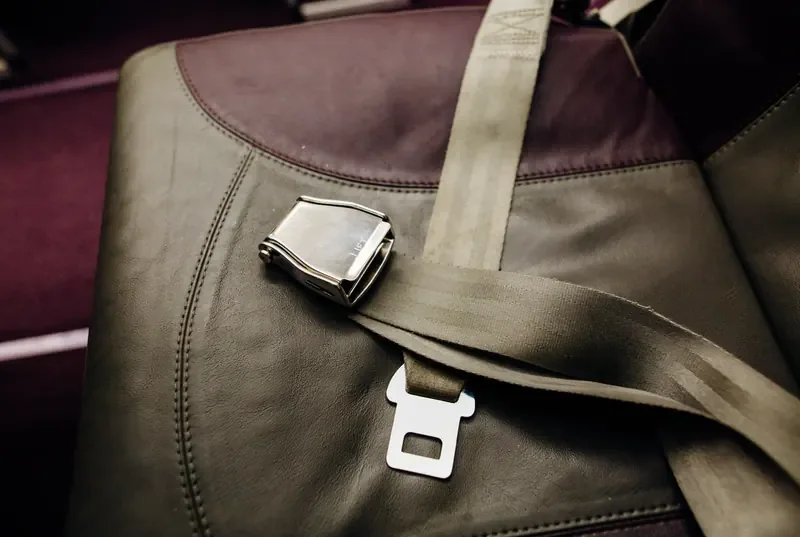
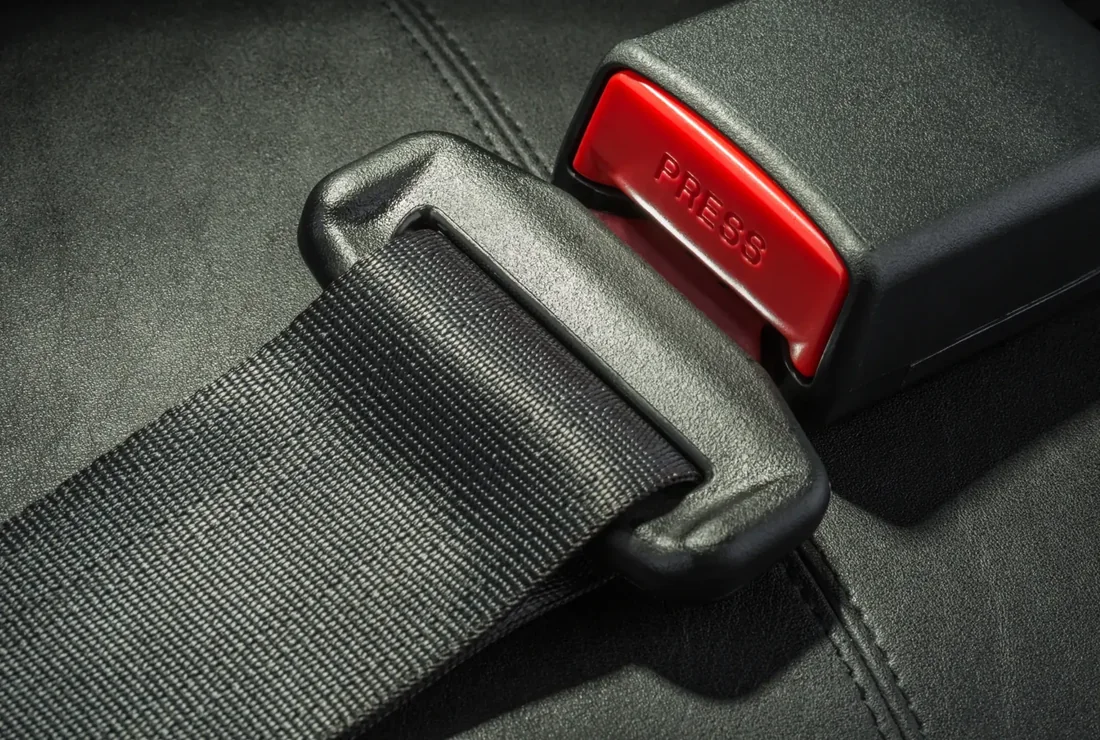
Seat belt assembly detail showing webbing, latch plate and buckle housing
Driver fastening a seat belt inside a fleet vehicle

Enquiries

Tell us the application, not just the part

Knowing how the vehicle is used changes what we recommend. Describe the operation alongside the vehicle, and the answer will be better for it.

Share the vehicle, the seat position and the belt configuration you are replacing or specifying, and we will come back with the options that fit.