Overview
How this category works
Not every restraint problem needs a complete assembly. Where one element has failed and the rest of the installation is sound, supplying the individual component is often the more sensible route — provided the replacement is genuinely compatible with everything staying in service.
This category covers the supporting pieces of a restraint installation: webbing, latch plates, anchor bolts and associated hardware, spacers and bushes, and the trim pieces that finish an installation and keep webbing running where it should. These are the items that are easy to overlook when planning a job and awkward to be missing halfway through it.
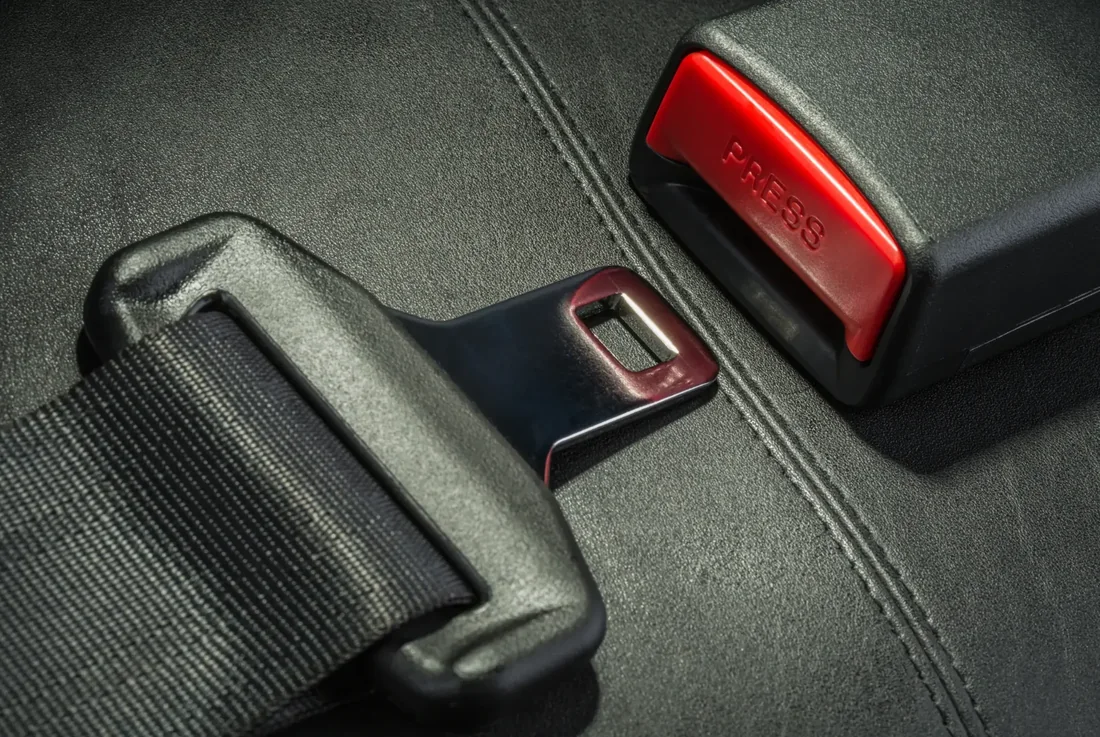
Compatibility is the whole question here, and it is less forgiving than it appears. Anchor hardware has to match the thread, diameter and length the mounting point expects, and the load path it forms is part of the restraint rather than incidental to it. Webbing width is broadly consistent across passenger applications but is not universal, and it has to run freely through the latch plate slot without binding. Latch plates have to match the receiver they will engage.
One firm limit: we supply components to restore an installation to a correct working condition, not items that alter how a restraint behaves. Devices that hold webbing away from the occupant, introduce slack, or defeat a reminder system change how the restraint performs in exactly the circumstances it exists for. We do not supply those, and we would advise against fitting them.
Typical applications
Where this category is used
-
Partial replacement work
Where a single component has failed and the remainder of the installation is in serviceable condition.
-
Refurbishment and restoration
Bringing an ageing installation back to a correct working condition without necessarily replacing every element.
-
Build and conversion work
Where individual components are specified as part of a new seating installation rather than replacing an existing one.
-
Workshop stock
Anchor hardware, spacers and trim items that are routinely needed and routinely missing when a job is underway.
Selection
What decides which one you need
Work through these before ordering. Where you cannot answer one of them, that is exactly the sort of thing to put in an enquiry rather than to estimate.
| Consideration | Why it matters |
|---|---|
| Compatibility with retained components | Anything staying in service defines what the new part has to work with. Establish this first. |
| Webbing width and construction | Must run freely through the latch plate slot and spool correctly on the retractor without binding. |
| Anchor hardware specification | Thread, diameter, length, head type and any spacers or shoulder bushes the mounting point requires. |
| Latch plate geometry | Slot dimensions and profile, matched to both the webbing running through it and the receiver it engages. |
| Trim and finishing pieces | Guides, covers and escutcheons that keep the webbing routed correctly and finish the installation. |
| Whether a component swap is the right call | If several elements show wear, a complete assembly is usually the better outcome than repeated partial repairs. |
Questions
About seat belt components & accessories
More questions covering replacement, fitment and bulk supply are answered on the FAQs page.
Re-webbing is specialist work, not a parts purchase. How webbing is terminated and secured is integral to how the restraint carries load, and getting it wrong is not visible from the outside. If the webbing is the problem, a complete assembly is usually the appropriate answer.
Yes, as part of this category. Thread, diameter, length and head type all have to match the mounting point, so tell us what the vehicle uses — or send a photograph of the existing hardware alongside the anchorage.
No. Items that hold webbing away from the occupant or introduce slack change how the restraint performs in the situation it exists for. We supply components that restore an installation to correct working condition, not ones that alter how it behaves.
Related categories
Often looked at alongside this
Three-Point Seat Belts
A diagonal shoulder section and a lap section anchored at three points — the standard occupant restraint in modern passenger vehicles, and the category we are asked for most often.
ViewRetractable Seat Belts
Self-retracting assemblies that manage slack automatically, hold the webbing against the occupant in normal driving, and stow it out of the way when unbuckled.
ViewLap (Two-Point) Seat Belts
Two-point belts restraining across the pelvis alone — still specified wherever a shoulder anchorage is unavailable or inappropriate to the seat design.
ViewEnquiries
Tell us the vehicle and the seat position
Send the make, model, year and position, plus photographs of the existing installation. That is normally enough for us to identify what you need or tell you what else to check.
Share the vehicle, the seat position and the belt configuration you are replacing or specifying, and we will come back with the options that fit.